

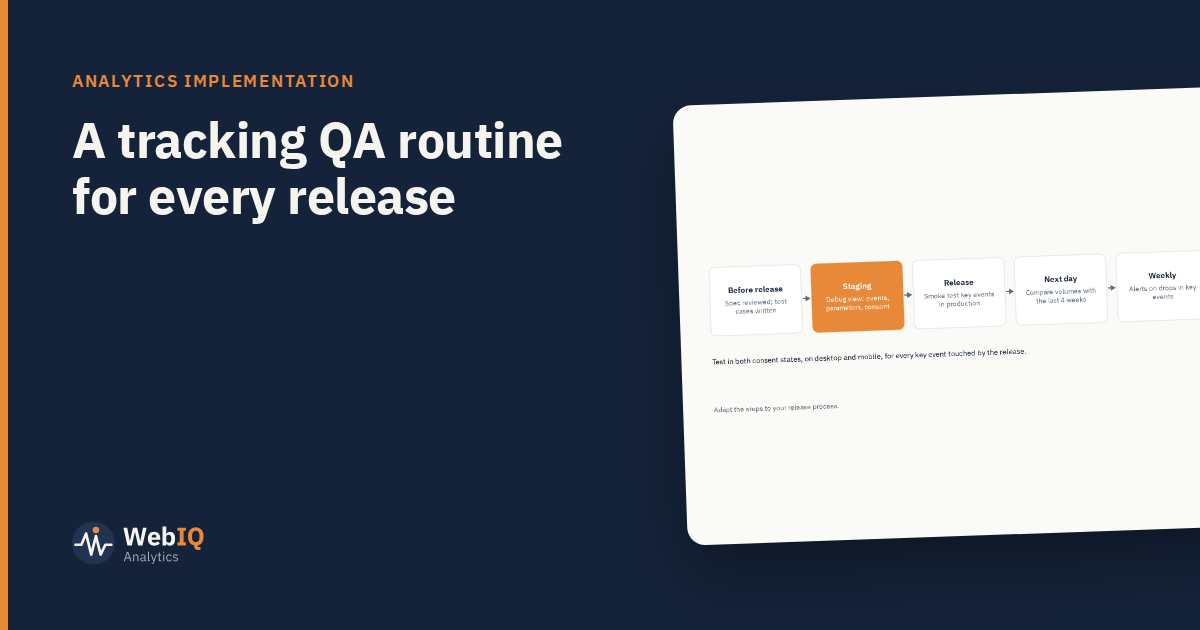
Most tracking breaks quietly. A redesign renames a button, a new checkout changes the data layer, a consent update blocks a tag. Nobody notices until a report looks odd weeks later. A short QA routine attached to every release prevents most of it.
Before release
- Check which events the release touches, using the event specification.
- Write or update test cases: the event, the trigger, expected parameters.
- Agree who will test and sign off.
In staging
- Use the analytics tool's debug view to walk through each affected journey.
- Confirm each event fires once, at the right moment, with the right parameters.
- Test in both consent states (accepted and declined) and on desktop and mobile.
- Record results and evidence (screenshots or recordings) in a QA log.
On release
- Run a quick smoke test in production on the key events: purchases, leads, sign-ups.
- Check that tags load and consent signals are sent.
The next day
- Compare yesterday's event volumes with the same weekday over the last four weeks.
- Investigate any key event that moved more than an agreed threshold (for example 20%).
Every week
- Automated alerts on sharp drops in key events, sessions by source, or unassigned traffic.
- A short review of open tracking issues.
Make it part of the release process
Tracking QA works when it's a step in the release checklist, not a favour someone remembers. Give it an owner, a checklist and a place to record results. It takes minutes per release and saves weeks of untrustworthy data.