

Marketing pipelines break when something upstream changes without warning: a field renamed in a platform export, a new account no one connected, a change to how spend is calculated. A data contract makes those changes visible before they break reports and models.
What a data contract is
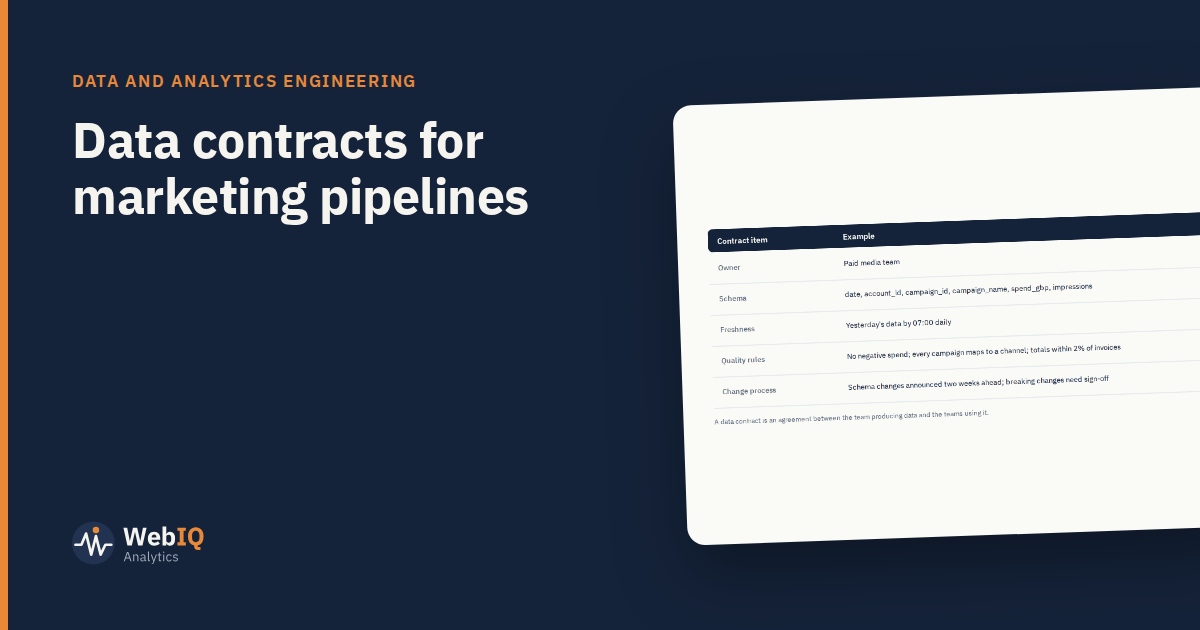
A written agreement between the team that produces a dataset and the teams that depend on it, covering:
- Owner: who is responsible for the data.
- Schema: the fields, their types and meanings.
- Freshness: when data arrives.
- Quality rules: what valid data looks like.
- Change process: how changes are announced and agreed.
Where they help most in marketing
- Spend data from platforms and agencies.
- Campaign naming and channel mapping, where a new naming habit can leave spend unmapped.
- Outcome data from finance or CRM, where definitions change with business processes.
- Offline media files from agencies, often delivered in changing formats.
Make contracts enforceable
A contract is most useful when it's checked automatically:
- Schema tests in the pipeline (expected columns and types).
- Freshness checks with alerts to the owner.
- Quality tests (no negative spend, totals within tolerance of invoices).
- A failed check blocks downstream jobs, so broken data never reaches a model or report.
Start small
Pick the one dataset that has caused the most pain, often spend, and write its contract on one page. Agree it with the producing team. Add tests. Then move to the next.
The cultural part
Contracts work when producers see the consumers. Share who depends on each dataset and what breaks when it changes. Most teams are happy to give notice once they know someone relies on their data.