

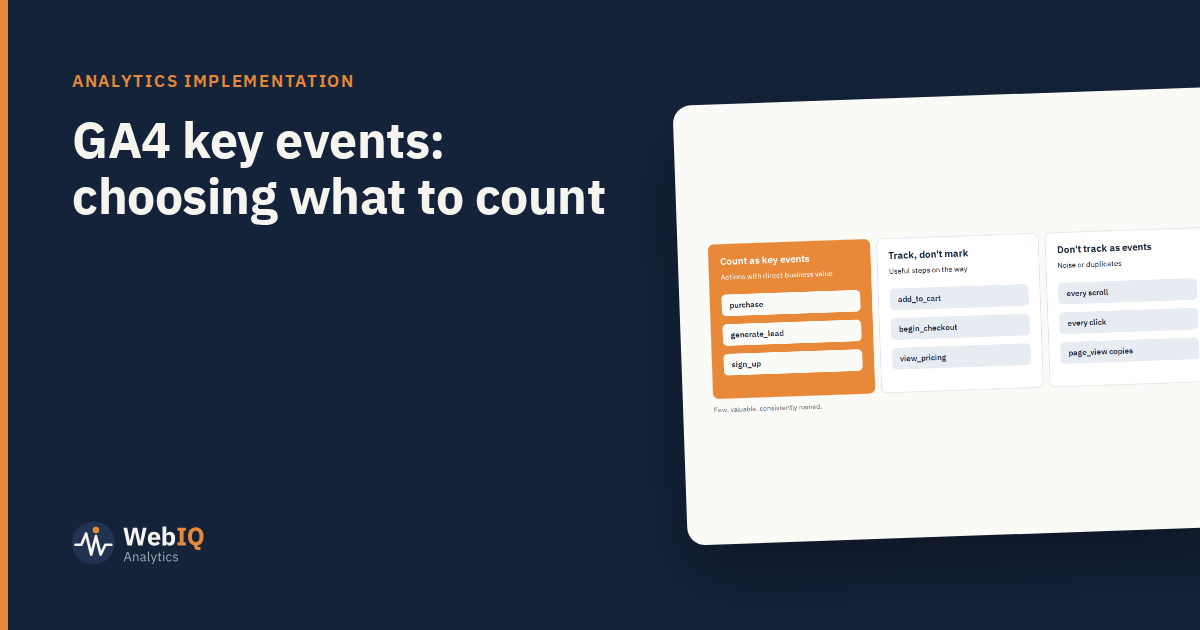
In GA4, "key events" are the events you mark as important business outcomes. They used to be called conversions. They drive reporting, feed advertising platforms when imported, and shape how success is judged. Choosing them carefully matters more than tracking everything.
What makes a good key event
- It has direct business value: a purchase, a qualified lead, a sign-up, a booked demo.
- It's counted reliably: fires once, at the right moment, with the right values.
- People act on it: someone makes decisions based on it.
Track, but don't mark
Steps towards an outcome are useful for analysis and funnel reports, but marking them as key events inflates totals and confuses bidding:
- Adding to basket
- Starting checkout
- Viewing pricing
- Starting a form
Track them as events; keep them off the key event list.
Leave out
- Every scroll or click: noise that hides the signal.
- Duplicates of page views.
- Events that fire on page load and say nothing about intent.
Counting method
GA4 lets you count a key event once per event or once per session. For purchases and leads, count every occurrence. For actions that only matter once per visit, count once per session. Decide per event and document it.
Values
Give key events a value where you can: revenue for purchases, an estimated value for leads (agreed with finance). Values let you compare outcomes properly and support value-based bidding if you import them into ad platforms.
Importing into ad platforms
Import only the key events you want platforms to optimise towards. Importing too many, or soft actions, teaches bidding to chase easy signals rather than business results.
Review regularly
Once a quarter, check that each key event still fires correctly, still matters, and still has an owner. Retire ones that don't.
A short list of reliable key events is worth more than a long list of inflated ones.