

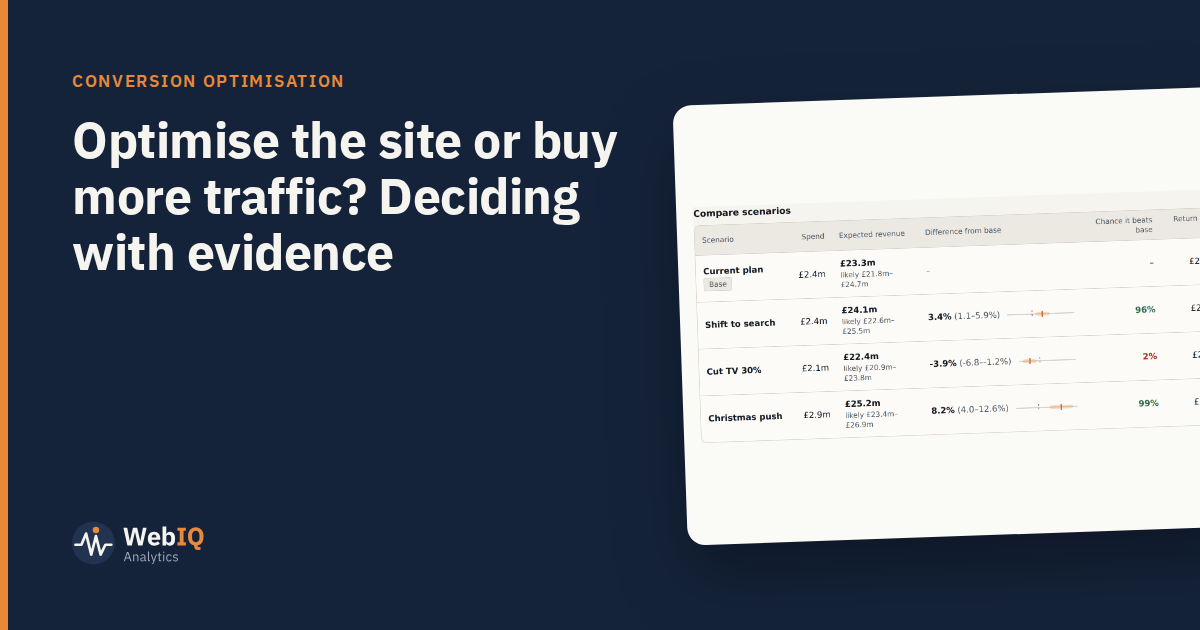
When growth stalls, the choice often comes down to two options: spend more on media to bring in more visitors, or improve the site so existing visitors convert better. Both can work. Comparing them properly needs the same thing for each: an estimate of the incremental effect, with a range.
The case for more traffic
Media scales quickly and predictably, up to a point. Every channel saturates: the next pound brings back less than the last. A mix model's response curves show how much headroom each channel has at today's spend.
The case for conversion
Improvements to the site apply to every future visitor, paid or not, and keep paying back without ongoing spend. But they take time to find, and many tests fail. The realistic gain is the size of improvements you can find, times how often you find them.
A simple comparison
- Media option: from the response curves, the expected extra revenue for an extra £X, with its range.
- Conversion option: for the same £X spent on research, design, build and testing, the expected improvement, based on your own test history and the traffic reaching the pages you'd change.
- Compare like with like: over the same period, accounting for how long each takes to deliver.
What usually decides it
- Channels near saturation favour conversion work.
- Low traffic to key pages limits what testing can find, favouring media or bigger redesigns.
- A poor-performing step with lots of traffic (a checkout, a lead form) is often the best opportunity for either.
Don't treat them as exclusive
The best plans usually do both: hold media at efficient levels and run a steady testing programme on high-traffic steps. Revisit the split each quarter as the response curves and test results update.