

A mix model is out of date as soon as it's delivered. New weeks of data arrive, campaigns change, tests report. Refreshing keeps it useful, but a refresh that rewrites every result each time destroys trust. The aim is current results that move only when the evidence moves.
How often
- Quarterly suits most businesses: enough new weeks to learn something, in time for budget reviews.
- Monthly can work for large advertisers with automated pipelines, but changes between months will be small and noisy.
- Annually is too slow for most budget cycles.
Keep the specification stable
Between refreshes, keep channels, controls, priors and transformations the same unless there's a deliberate, documented reason to change them. Then any movement in results reflects new data, not new choices.
What to check each time
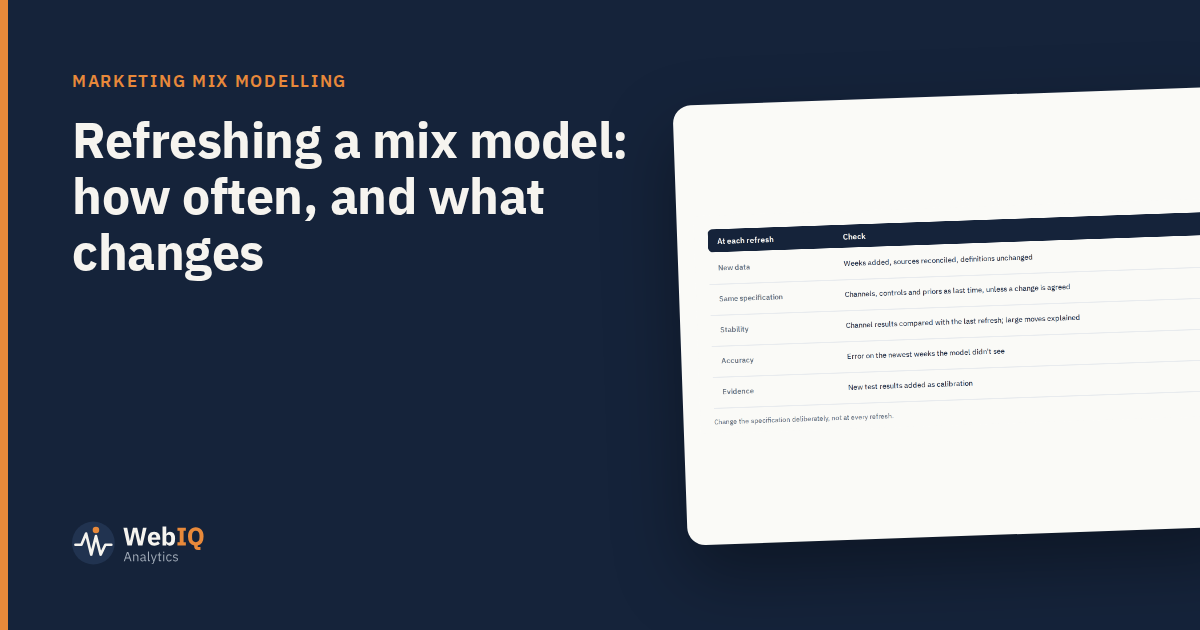
- New data: weeks added, sources reconciled, no definition changes.
- Stability: compare each channel with the previous refresh; explain large moves.
- Accuracy: error on the newest weeks the model hadn't seen.
- Evidence: add any new test results as calibration.
When to change the specification
- A new channel with enough history to measure.
- A structural change: new markets, a new pricing model, a major product launch.
- Clear evidence the model misses something: persistent errors around the same events.
Make these changes in a planned rebuild, with old and new versions compared side by side.
Communicate changes clearly
Each refresh should come with a short note: what's new, what moved and why, and what stayed the same. Stakeholders accept moving numbers when they understand why they moved.
Automate the routine parts
Data preparation, fitting, diagnostics and the comparison with last time can all be automated. Human time is best spent on interpretation and on the decisions the results inform.