

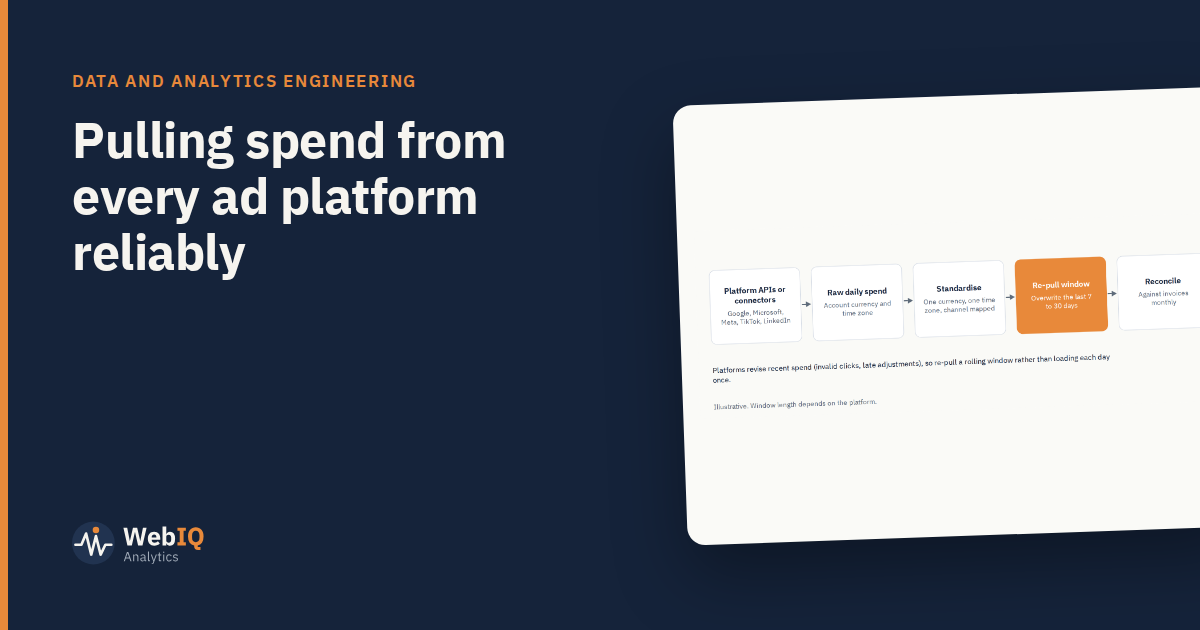
Spend data looks simple: each platform tells you what you spent. In practice it's one of the most common sources of reporting errors. Different time zones, currencies, late adjustments and expiring access tokens all creep in.
Choose how to extract
- Platform APIs directly (Google Ads, Microsoft Ads, Meta, TikTok, LinkedIn and others). Most control, more engineering.
- Managed connectors. Faster to set up; check how they handle re-pulls, schema changes and historical backfills.
- Manual exports. Fine for a one-off analysis; not for anything that feeds a model or a board report.
Standardise before you aggregate
- Currency. Convert to one reporting currency using a documented rate source and date.
- Time zone. Platforms report in the account's time zone. Align to one, or weekly totals won't match.
- Spend definition. Media cost only, or including platform and agency fees? Pick one and apply it everywhere.
- Channel mapping. Apply your channel taxonomy at this stage, so every downstream table agrees.
Re-pull a rolling window
Platforms revise recent figures: invalid-click credits, late conversions affecting spend-based bidding, billing adjustments. If you load each day once, those revisions are lost. Instead, re-pull and overwrite the most recent 7 to 30 days on every run, depending on the platform.
Reconcile with finance
Once a month, compare platform spend with invoices or finance's media cost figures. Agree a tolerance (for example 1% to 2%) and investigate anything outside it. Common causes: fees, currency timing, credits and campaigns billed through agencies.
Watch for silent failures
- Expired tokens: extraction runs but returns nothing. Alert when spend for a platform drops to zero unexpectedly.
- New accounts: spend in an account nobody connected. Keep a list of accounts and check it against billing.
- Schema changes: a renamed field breaks a transformation. Tests on row counts and totals catch it.
The payoff
Reliable spend is the foundation for every efficiency metric and every mix model. It's unglamorous work, and it's the difference between numbers finance accepts and numbers it questions.