

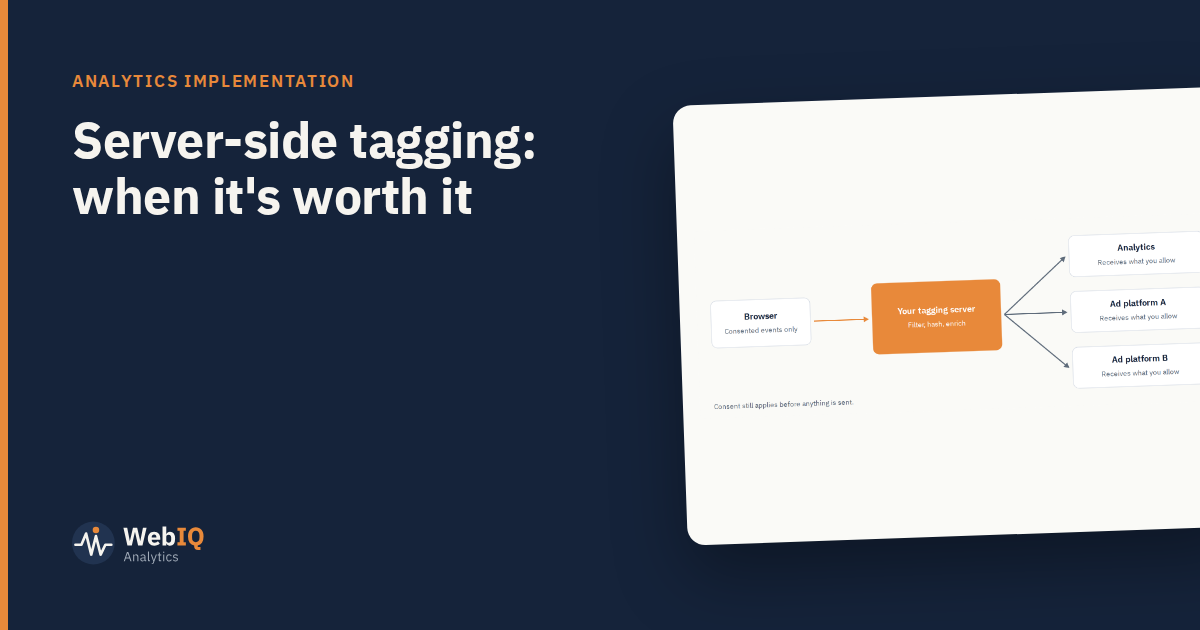
Server-side tagging moves tag processing from the visitor's browser to a server you control, usually on your own subdomain. The browser sends events to that server, which decides what to forward to analytics and ad platforms.
What it improves
- Control. You decide exactly what each platform receives, and can remove or hash personal data before it leaves your systems.
- Data quality. Fewer third-party scripts in the browser means fewer conflicts and the chance to validate and enrich events.
- Page performance. Less tag work in the browser.
- Durability. Data collected in a first-party context tends to be more consistent.
What it doesn't do
- It doesn't bypass consent. Declined consent must be respected exactly as with browser tags. Any set-up sold as a way around consent is a legal and reputational risk.
- It doesn't fix poor event design. Bad events sent through a server are still bad events.
- It doesn't make attribution causal.
The costs
Hosting (usually a modest monthly cost, rising with traffic), configuration and ongoing maintenance, and the skills to run it. Someone needs to own it.
When it's worth it
- Significant paid media, with several platforms receiving conversion data.
- Real concerns about data control and what third parties receive.
- Page speed problems caused by tags.
When it probably isn't
A small site with a handful of tags and little paid media. The benefit may not justify the upkeep.
Do it in the right order
- Agree an event specification.
- Get consent working properly.
- Move collection server-side, running old and new in parallel until the numbers reconcile.
Then switch off the old tags, and keep the specification current.