

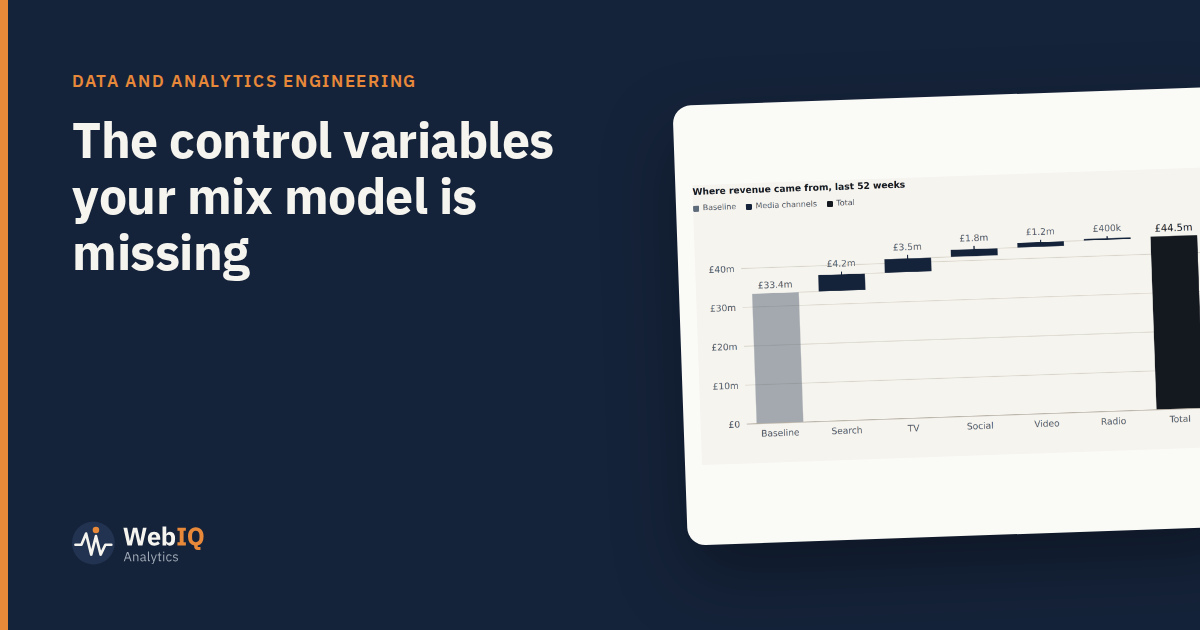
A mix model credits each channel with the sales it can't explain any other way. If something else moved sales and the model can't see it, marketing gets the credit, or the blame.
Price
Price changes often move sales more than any single channel. If a price cut coincides with a TV burst, a model without price will hand the extra sales to TV. Include an average price or a price index against a base week.
Promotions
Promotions are planned alongside campaigns, which is exactly why they need to be in the model. Record dates and depth (average discount), not just a yes or no.
Distribution and availability
For retail and FMCG, store count or product availability. For eCommerce, stock-outs and site outages. A week where the product couldn't be bought shouldn't count against the marketing running that week.
Seasonality and holidays
Most models handle seasonality, but key trading events (Black Friday, Christmas, sales periods) often need explicit flags, especially when they move dates year to year.
Competitors
Even a rough index of competitor activity helps: share of voice, competitor promotions, or a major launch. Perfect data is rare; something is better than nothing.
The economy and the market
For some categories, consumer confidence, interest rates or category demand matter. Add them if there's a clear reason, not just because they're available.
How to tell if controls are missing
- Large unexplained spikes in the residuals around the same events.
- A channel with an implausibly high return that happens to run at the same time as promotions.
- Results that change a lot when one season is removed.
The fix is rarely more modelling. It's going back to the business and asking what else happened that week.