

Most disappointing mix models fail on the data, not the maths. These checks take an afternoon and save weeks.
History
- At least 104 weeks of data.
- Weekly, not monthly.
- No unexplained gaps or step changes.
Spend
- Every paid channel, from one consistent source.
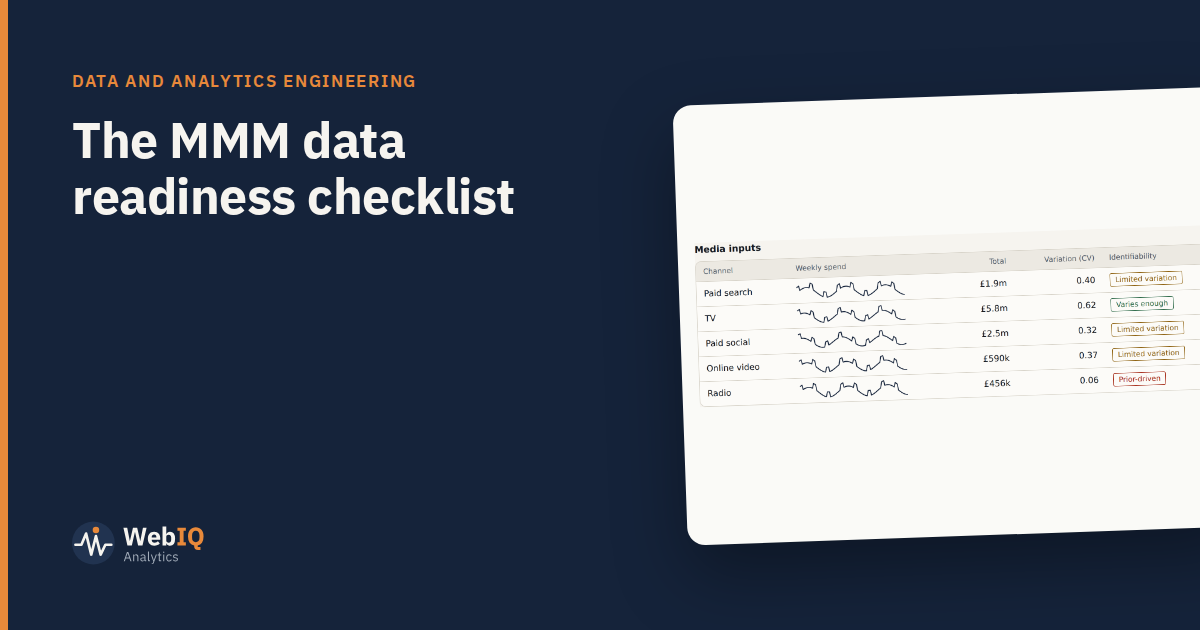
- Each channel's spend varies over time.
- Channels aren't always planned together.
- Delivered spend, not plan or budget.
- Regional spend is real, not national spend split by population.
Outcomes
- One agreed outcome definition.
- Total outcomes across all channels, not just tracked digital sales.
- Returns and cancellations treated consistently.
Controls
- Price and price changes.
- Promotions, with dates and depth.
- Seasonality and holidays identifiable.
- Competitor activity, even as an index.
- Known events logged.
Structure and evidence
- Sources, definitions and owners documented.
- A refresh process exists.
- At least one experiment or holdout result.
- Someone can explain what changed in marketing each quarter.
How to read your answers
- Mostly yes: you're ready to model.
- Gaps in controls or structure: model with caveats, and fix them for the next refresh.
- Gaps in history, spend variation or outcomes: fix the data first. A model now would mostly reflect its assumptions.
Two checks matter more than the rest: whether spend varies (5) and whether channels move independently (6). If either fails, no modelling technique will rescue the result. The fix is planned variation in spend, or a test.
If you'd like a second opinion on your answers, a short readiness assessment is the first step in every WebIQ mix modelling engagement.