

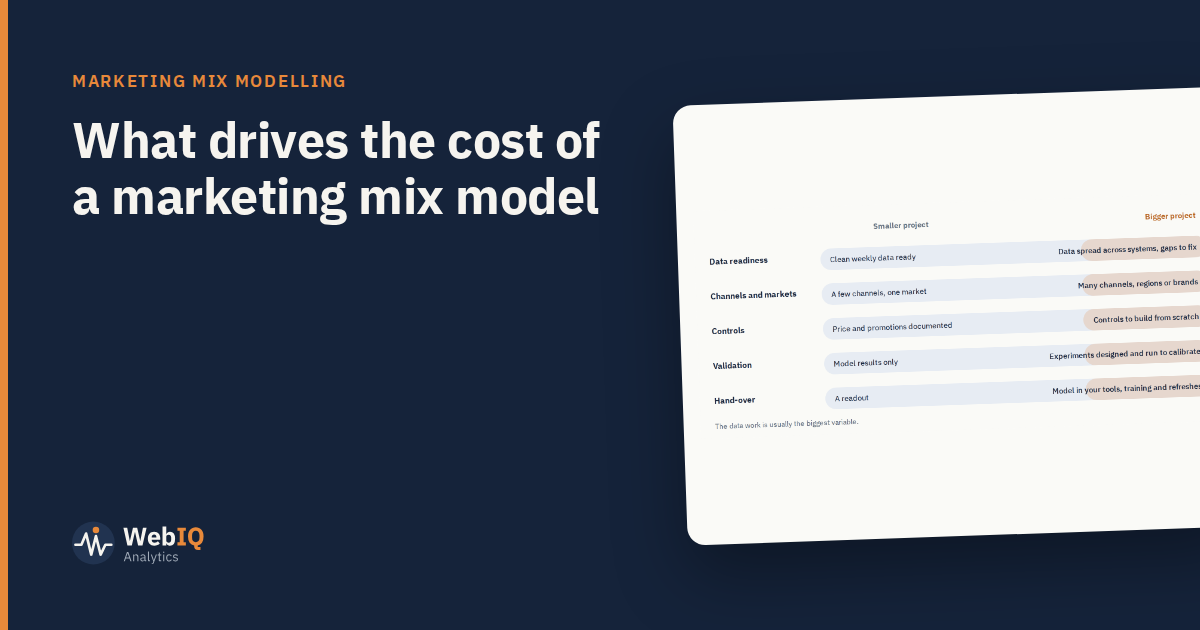
Mix modelling projects range from a few weeks to several months. The modelling itself is rarely what makes the difference. These five things are.
1. Data readiness
The biggest variable. If spend, outcomes and controls already sit in one clean weekly table, the project is mostly modelling and interpretation. If spend lives in five platforms and promotions in someone's spreadsheet, most of the effort goes into building the dataset.
2. Channels, markets and brands
Each extra market or brand is close to an extra model, and more channels mean more to separate and more checks. A single-market, eight-channel model is a very different project from a multi-brand, multi-region one.
3. Controls
Price, promotions, distribution and competitor activity often need to be built from scratch. Documented controls save weeks.
4. Validation
A model reported on its own costs less than one checked against experiments. Designing and running a geo test adds time, but it's also what makes the result defensible, especially for the channels the model is least sure about.
5. Hand-over
A one-off readout is the smallest deliverable. A model handed over in your tools, with documentation, training and a refresh schedule, takes longer but means the second model costs a fraction of the first.
Where to save, and where not to
- Save by preparing the weekly dataset in advance, starting with one market, and grouping minor channels.
- Don't save on validation or hand-over. A cheaper model nobody trusts, or one that can't be refreshed, is the expensive option over a year.
When you ask for a quote, describe your data honestly. The best estimates come after a short readiness check, not before.