

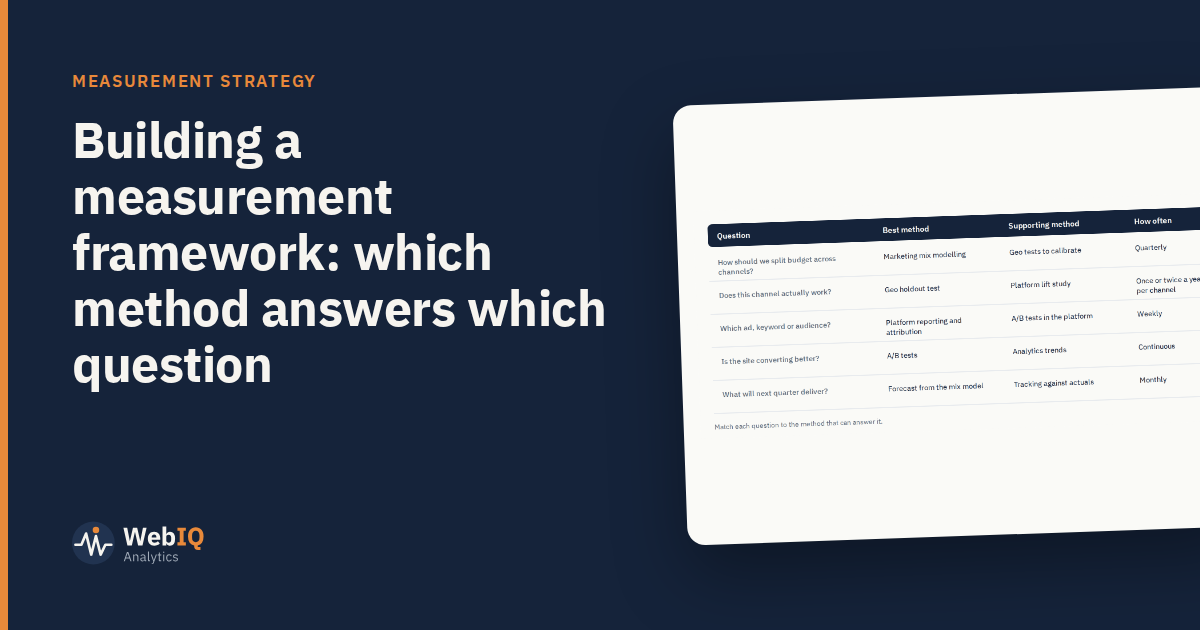
Most measurement arguments are really about using the wrong tool for the question. Attribution gets asked about budget splits; mix models get asked about keyword bids; nobody tests anything. A measurement framework fixes that by matching each question to the method that can answer it.
Start from the decisions
List the decisions marketing actually makes, and how often:
- How to split budget across channels (quarterly or annually)
- Whether a specific channel works (when evidence is weak or spend is large)
- Which ads, keywords and audiences to favour (daily or weekly)
- Whether site changes improve conversion (continuously)
- What next quarter is likely to deliver (monthly)
Match methods to decisions
- Marketing mix modelling for cross-channel budget decisions, with ranges.
- Geo holdout tests to settle whether a channel works, and to calibrate the model.
- Platform reporting and attribution for optimisation inside a channel.
- A/B tests for site and product changes.
- Forecasts from the model, tracked against actuals, for planning.
Agree definitions
A framework only works if everyone measures the same things:
- One outcome definition (orders, revenue, qualified leads), owned jointly with finance
- One channel taxonomy
- One spend definition
- Agreed reporting periods
Decide how methods combine
- When the model and a test disagree, the test usually wins for that channel, and the model is recalibrated.
- Attribution numbers are never added to modelled numbers.
- Every reported figure says which method produced it.
Set a cadence
- Weekly: platform and site performance
- Monthly: forecast tracking, data quality review
- Quarterly: mix model refresh, budget review, test plan
- Twice a year: framework review
Write it down
A two-page document listing questions, methods, owners, definitions and cadence is enough. Share it with marketing, finance and agencies. It ends most arguments before they start, and makes every new analysis easier to place.