

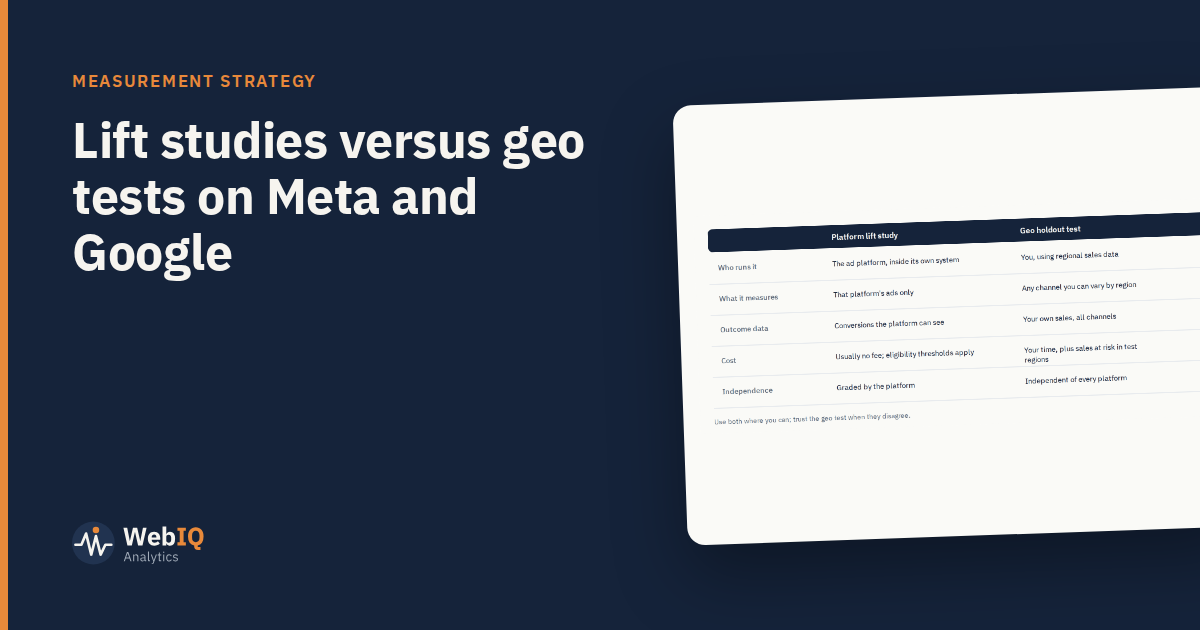
Both Meta and Google offer lift studies: experiments run inside the platform that compare people (or areas) shown your ads with a held-out group. They're a big step up from platform-reported conversions. They're also different from independent geo holdout tests, and it's worth knowing how.
How platform lift studies work
The platform splits an audience into a test group, which sees your ads, and a control group, which doesn't. It then compares conversions between the two. Some studies split by user, others by geographic area. Eligibility, minimum spend and available formats vary by platform and change over time.
How geo holdout tests work
You reduce or pause spend in some regions, keep it running in comparable regions, and compare your own sales data between them. The analysis is yours, using methods such as synthetic control.
The key differences
- Scope: a lift study measures one platform's ads. A geo test can measure any channel you can vary by region, including TV, radio and outdoor.
- Outcome data: lift studies count conversions the platform can observe. Geo tests use your own sales, across all channels and devices.
- Independence: a lift study is run and analysed by the platform selling the media. A geo test is independent.
- Cost: lift studies usually carry no fee but have eligibility thresholds. Geo tests cost analysis time and some sales at risk in the test regions.
When to use which
- Use a lift study for a quick, low-cost read on a single platform's incrementality, especially when you can't vary spend by region.
- Use a geo test for big budget decisions, cross-channel questions, offline channels, or when you need an independent answer.
- Use both where you can. If they broadly agree, confidence goes up. If they disagree, trust the geo test and investigate why.
Using results well
Whatever the method, report the result with its range, record the period and conditions, and feed it into your mix model as calibration evidence for that channel. A single test answers a question at one point in time; re-test when strategy, creative or spend levels change significantly.